Raise Your Hand, Kind of
I recently visited Pt. Reyes National Seashore, a 110 square mile section of protected wilderness and private land along the California coast. It’s a unique place, with cliffs, prairies and dunes. Among its 1,500 species of plants and animals are Northern elephant seals, which use some of the coastal landscape to haul out, breed and give birth.
Elephant seals are enormous blubber-y animals and even on a cloudy day they can overheat while laying on the beach. One way to cool themselves is to toss wet sand over their bodies, cooling by contact and evaporation. The sand also provides a bit of sun protection.
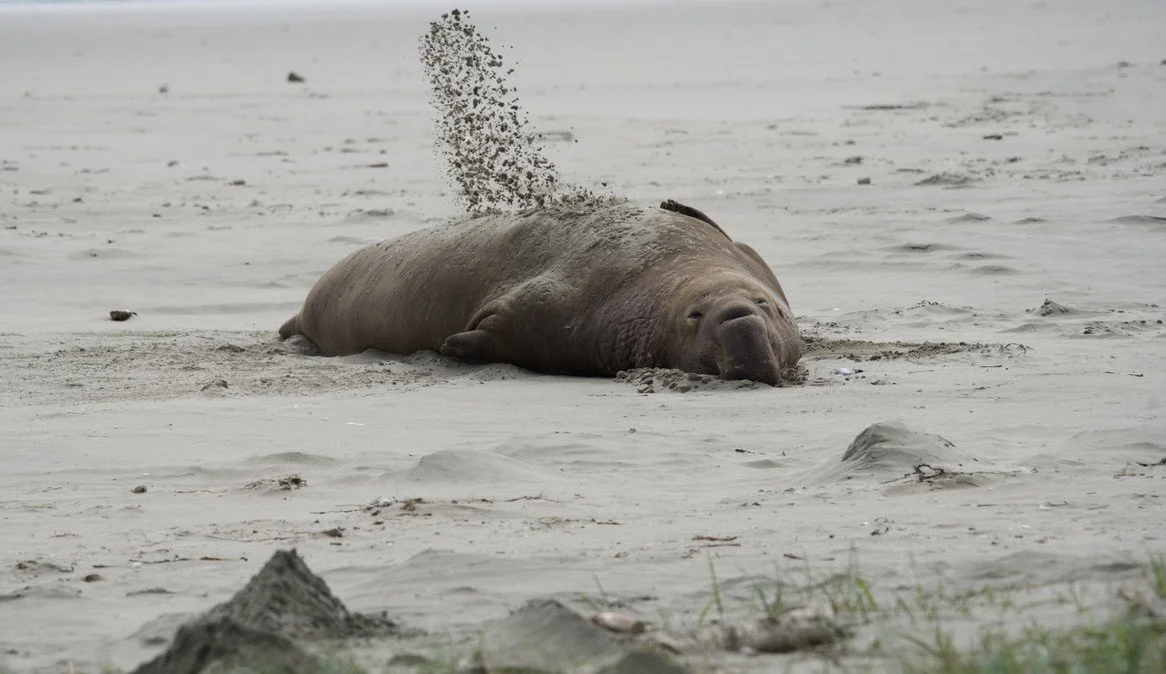
Elephant seal bull flips some sand across its torso.
While they’re in the ocean, seals will raise their flippers above the surface of the water to help regulate their body temperatures. Elephant seals have modified that idea for “land use”, so to speak. Since elephant seals don’t sweat, they’ll sleep with one flipper raised in the air, allowing ocean breezes to cool them. Every once in a while they raise two front flippers at once. (It looks like they’re hugging an invisible friend).
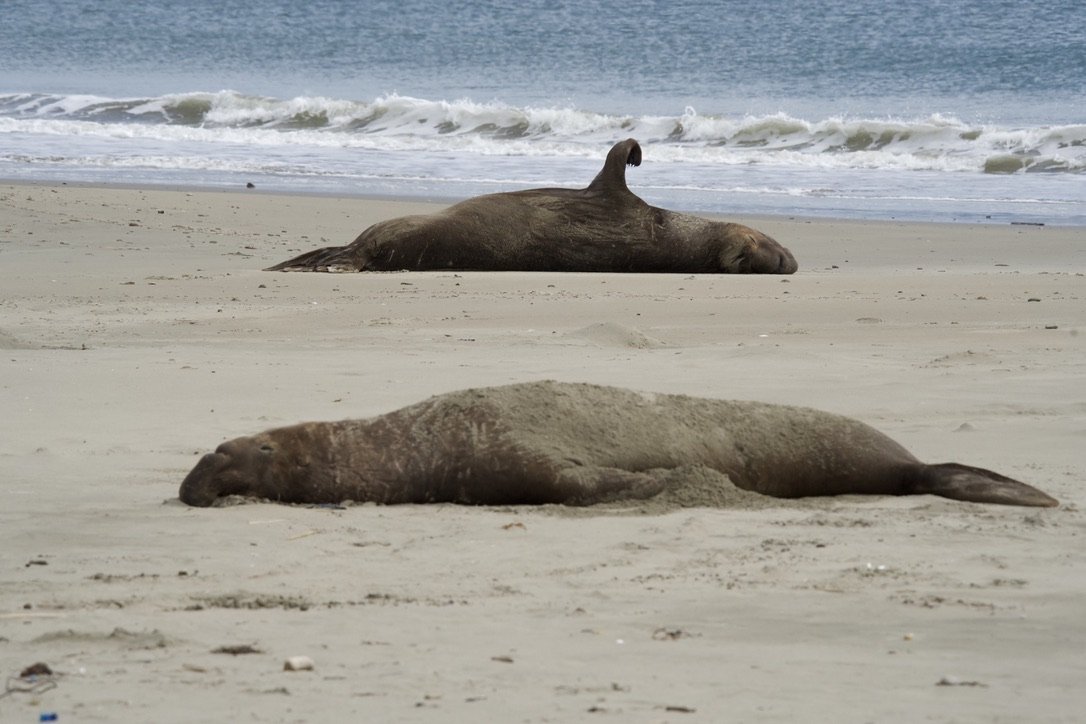
You can see the bull sleeping closer to the surf has his eyes shut and one flipper raised.
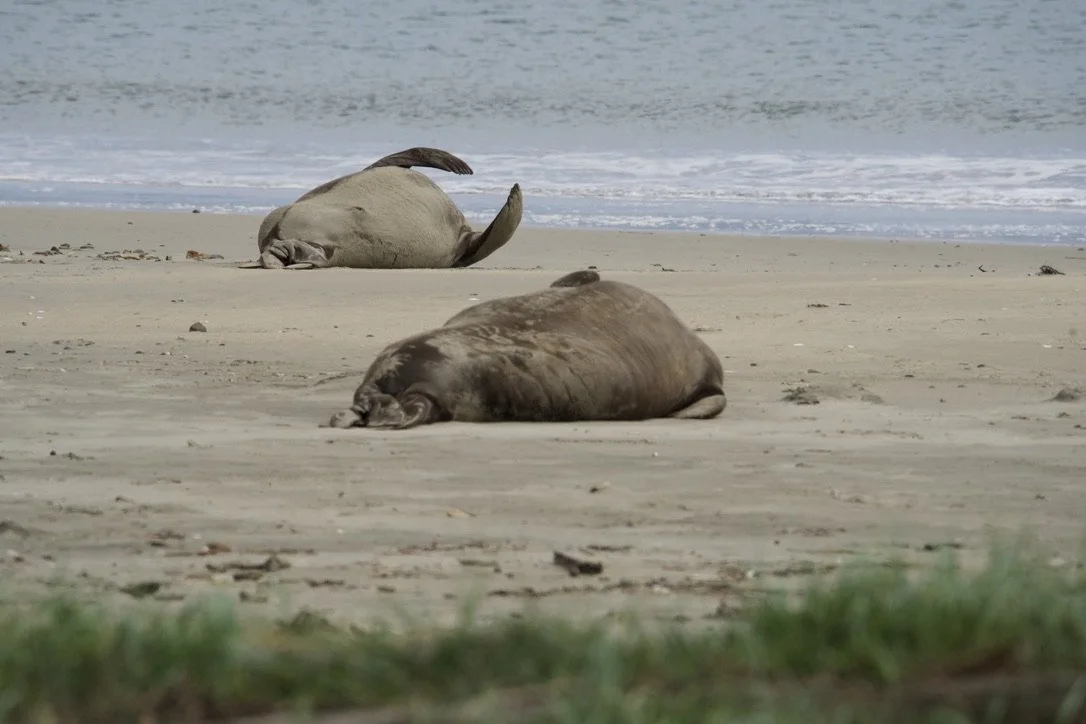
The more distant bull has two flippers raised for thermoregulation, though that didn’t seem to be as common as one at a time.
Elephant seals armpits are considered “thermal windows”. There’s minimal blubber beneath the front flippers and veins are also relatively close to the surface, facilitating faster and more efficient cooling. It’s makes a ton of sense or, if you’d like to equate it to bull elephant seal weight: two tons of sense. (Egad they’re huge!)
Anyway, I think it’s fascinating. It’s one of the seemingly infinite things that need to happen to make a complex biological system work.